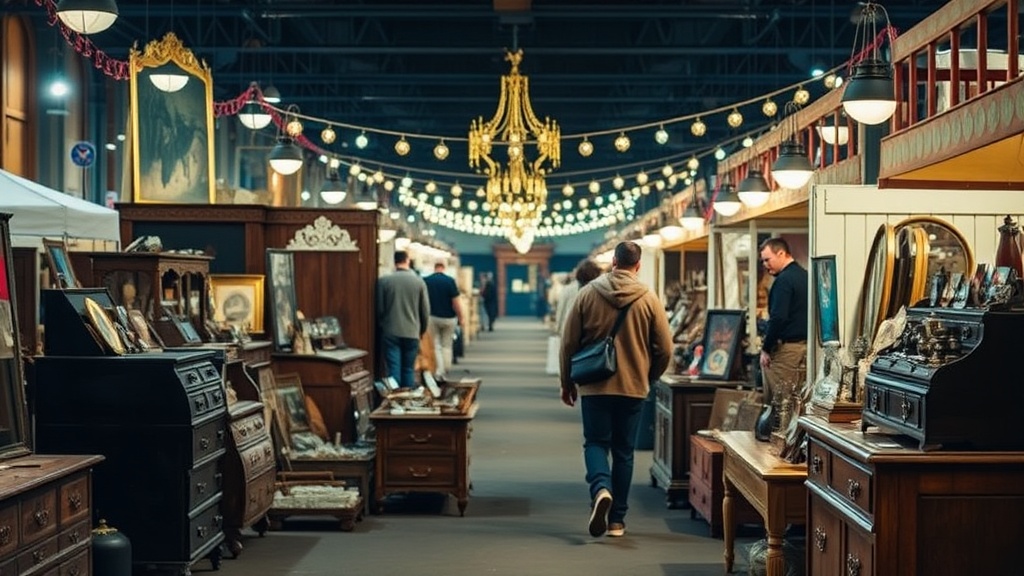
Finding Hidden Gems at Local Antique Fairs

A collector at a small rural fair in Wellington County once spent three hours debating the provenance of a single brass candlestick, only to realize it was a modern reproduction. It’s a common trap. Finding high-quality antiques at local fairs requires more than just showing up; it requires a strategy to separate the genuine heirlooms from the mass-produced clutter. This guide breaks down how to scout, vet, and purchase authentic-feeling pieces at antique fairs across Ontario.
What Should You Look for in an Antique?
Authentic antiques are defined by their age, craftsmanship, and the physical evidence of their history. You aren't just looking for "old stuff"—you're looking for items that show signs of intentional construction. In the Ontario market, this often means looking for hand-hewn wood, hand-forged metal, or specific maker's marks that pre-date industrial mass production.
When you're scanning a booth, look for the "imperfections" that define real vintage items. A hand-turned wooden bowl will have slight irregularities that a machine-made piece simply won't have. If you see a piece of furniture with perfect, uniform dovetail joints, it’s likely a modern reproduction. Real antiques often have small quirks—a slight wobble in a chair leg or a hand-stamped hallmark on a piece of silver—that tell a story.
Check the underside. The bottom of a vase, the back of a picture frame, or the underside of a drawer is where the truth lives. A machine-made item will look uniform and clean. A piece that has lived through a century in an Ontario farmhouse will show signs of wear, patina, or even old repairs. That patina—the way wood darkens or metal dulls over time—is something you can't fake with a quick spray paint job.
One thing to watch out for is "distressed" furniture. Many modern retailers sell items that have been intentionally scuffed to look old. To tell the difference, look at the edges. If the "damage" is perfectly symmetrical or looks too uniform, it’s probably fake. Real wear happens in high-traffic areas, like the corners of a tabletop or the edges of a drawer.
For those interested in the technical side of material science, the history of patina provides a deep dive into how surfaces age. Understanding this can help you distinguish between actual aging and artificial distressing.
How Much Should You Pay for Vintage Items?
Pricing at local antique fairs is highly subjective and depends heavily on the seller's knowledge and the item's rarity. Unlike a high-end auction house in Toronto, local fairs in Central Ontario often operate on a "fair price" model where there is significant room for negotiation. You might find a mid-century modern lamp for $20 at one booth and $80 at another, even if they look nearly identical.
To avoid overpaying, you need to establish a baseline. Here is a general breakdown of how pricing typically works for common categories found at local fairs:
| Item Category | Value Driver | Typical Fair Price Range |
|---|---|---|
| Small Brass/Silver | Weight and Hallmarks | $15 - $50 |
| Mid-Century Decor | Designer Name/Style | $30 - $120 |
| Hardwood Furniture | Wood Type (Oak/Cherry) | $75 - $300+ |
| Vintage Glassware | Maker's Mark (e.g., Pyrex) | $10 - $45 |
Don't be afraid to ask the seller about the item's history. A seller who knows their stuff will be happy to talk about where the piece came from. If they can't tell you anything beyond "it's just old," the price should probably reflect that lack of provenance. If you're looking at a piece of high-end kitchenware, like a vintage Pyrex baking dish, the price is usually very stable because the demand is predictable.
Negotiation is a standard part of the antique experience. If you see something you love but it's slightly over your budget, try offering a round number. "Would you take $40 for this?" is a much better approach than "This is too expensive." Most local vendors are happy to haggle a few dollars to make a sale.
How Can You Verify if an Item is Real?
Verification comes down to inspecting the construction methods and looking for specific maker's marks or hallmarks. If you aren't sure about a piece, use the "light and touch" method: hold it up to the light to check for cracks or thickness inconsistencies, and feel the texture for any artificial coatings.
Here are three quick ways to verify your finds:
- Check the fasteners: Look at the screws or nails. Hand-forged nails are tapered and irregular; modern screws are perfectly uniform. If you see a Phillips head screw on a piece of "antique" furniture, it's almost certainly a modern piece or has been heavily repaired.
- Inspect the weight: Genuine vintage metalware or heavy ceramics often have a weight and "heft" that modern, hollowed-out versions lack. If a piece feels surprisingly light, it might be a modern resin or plastic imitation.
- Look for the "tell-tale" signs: On textiles or clothing, look at the seams. Hand-stitched seams are slightly uneven. On paper or books, check the edges of the pages—older paper tends to yellow and become brittle in a specific way that isn't easily replicated by tea-staining.
It's also worth checking online resources to confirm your findings. If you find a piece of pottery or a piece of jewelry, a quick search on a site like eBay can show you what similar items are actually selling for. This gives you a realistic "market value" to work with when you're standing at the booth.
A useful tip for anyone collecting textiles or linens is to look at the fiber content. Before the mid-20th century, most household linens were natural fibers like linen, cotton, or wool. If you see a "vintage" tablecloth that feels like a polyester blend, it's a much later production. This is a great way to pass the time while exploring local markets and seasonal events in our area.
Sometimes, the best way to learn is to simply observe the experts. Spend a few minutes watching how the seasoned collectors interact with the vendors. Notice which items they pick up, how they inspect the bottoms of vases, and how they approach the negotiation process. You'll start to pick up on the subtle cues that separate a true treasure from a clever imitation.
One thing to remember: even if you find a "fake," it might still be a great piece for your home. Not everything has to be a museum-quality antique to be valuable. A high-quality reproduction can still add character to a room. The goal is to know exactly what you're buying so you aren't surprised by the quality later.
If you're looking for something specific—say, a particular style of Ontario farmhouse furniture—bring a photo on your phone. Showing a vendor a picture of what you're actually looking for is much more effective than trying to describe it. It also signals to the seller that you are a serious collector and not just a casual browser.
The beauty of the local antique circuit in Ontario is the variety. One weekend you might be at a massive fair in Fergus, and the next you're at a small roadside stand in rural Wellington. Each location has its own vibe and its own specific types of "finds." Keep your eyes sharp, your budget realistic, and always, always check the underside of the item.
Steps
- 1
Research Local Calendars
- 2
Inspect Item Condition
- 3
Negotiate Fair Prices