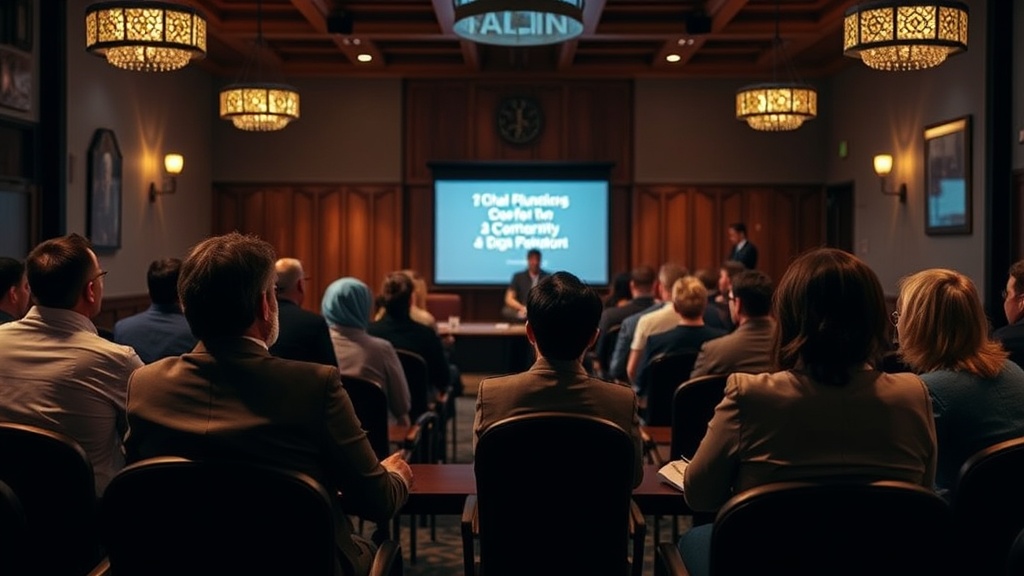
How to Make Your Voice Heard at Centre Wellington Township Council Meetings

Is Speaking at Council Meetings Only for Politicians and Activists?
There's a persistent myth in our community that township council meetings are reserved for ward representatives, die-hard activists, or people with connections at the Wellington County administration building. That couldn't be further from the truth. Centre Wellington's municipal government operates under principles of open transparency—and your perspective as a resident carries weight, whether you're concerned about road maintenance on St. Andrew Street, zoning changes near the Grand River, or snow removal routes in your neighborhood.
Understanding how to participate effectively in local governance isn't about becoming a political figure. It's about being an informed member of our community who recognizes that decisions affecting our daily lives—from park improvements to infrastructure investments—are shaped by the voices that show up. Centre Wellington residents have more direct access to decision-makers than most realize, and learning the process takes far less time than you'd expect.
How Do I Know When Centre Wellington Council Meets and What's on the Agenda?
The Township of Centre Wellington holds regular council meetings that rotate between the Fergus and Elora municipal offices. These sessions typically occur twice monthly on Monday evenings, though special meetings can be called when urgent matters arise. The township maintains a comprehensive calendar on their official website where you can view upcoming dates, locations, and detailed agendas.
Here's what many newcomers don't realize: every agenda is posted publicly several days before each meeting. This isn't just a formality—it's your opportunity to review exactly what council will discuss. The agenda packages include staff reports, recommendations, background documents, and sometimes financial projections. If you're concerned about a development proposal on your street or curious about budget allocations for the Elora Community Centre, the agenda tells you when those items will be addressed.
Pay special attention to the "Public Question Period" or "Delegations" sections. These are your entry points for participation. A delegation means you request formal time to present on a specific topic, while the public question period allows spontaneous comments or inquiries. Both require different preparation approaches, and understanding which suits your situation saves time and increases your impact.
What's the Best Way to Prepare Before Speaking at a Centre Wellington Meeting?
Preparation transforms a nervous resident into a compelling community voice. Start by reading the relevant staff reports thoroughly. Centre Wellington's municipal staff are thorough—their reports typically outline the issue, present options, and make recommendations. Understanding their perspective helps you frame your comments constructively rather than reactively.
If you're presenting as a delegation, you're required to register in advance through the township clerk's office. This isn't bureaucracy for its own sake; it ensures council knows to expect you and can allocate appropriate time. Most delegations receive five to ten minutes, depending on the complexity of the issue. Use this time wisely. Structure your remarks with a clear opening statement, two or three key points supported by facts or personal experience, and a specific request or question.
For those speaking during public question period, preparation looks different. You'll have less time—usually two to three minutes—so precision matters. Write down your main point in a single sentence. If you can't articulate it concisely, you haven't refined your message enough. Consider visiting the meeting location beforehand if you've never been. The council chambers at the Centre Wellington Township administration buildings have specific seating arrangements and audio systems that feel less intimidating when you've seen them before the pressure is on.
How Can I Make Sure Council Actually Listens to What I'm Saying?
The difference between being heard and being influential often comes down to approach. Council members—whether representing Fergus, Elora, or the surrounding rural wards—respond better to specificity than general complaints. Instead of saying "roads are terrible," identify the specific intersection, reference past repair schedules, and acknowledge budget constraints. This signals you've done homework and respect the complexity of municipal governance.
Personal stories resonate more than abstract arguments. When Centre Wellington considered changes to the Wellington County Library branch hours, residents who shared how the current schedule affected their children's homework routines or their ability to access job search resources had more impact than those simply stating "libraries are important." Your lived experience in this community is data—use it.
Timing also matters enormously. Speaking early in a debate, before positions harden, often proves more effective than last-minute interventions. Watch for "public meetings" on planning matters—these are legally required consultations where your input becomes part of the official record and must be considered in decisions. Regular council meetings offer less formal influence but still shape how representatives understand community priorities.
What Happens After I Speak—Does My Input Actually Matter?
This is where many residents become discouraged, assuming their comments disappear into the bureaucratic void. In reality, Centre Wellington's council meeting minutes are public documents, and your delegation or comment becomes part of the official record. More importantly, council members often reference public input during deliberations—sometimes directly quoting residents who spoke.
Follow-through separates effective participants from one-time speakers. If council requests additional information or defers a decision, check the next agenda to see if your issue returns. Email your ward representative afterward—briefly, politely—referencing what you said and asking how the issue is progressing. This isn't being pushy; it's demonstrating sustained interest in our community's governance.
Building relationships with municipal staff also helps. The planning department, public works, and recreation services employ people who live here too. They're often the ones writing reports that inform council decisions. A respectful conversation with the right staff member—asking questions rather than making demands—frequently yields more insight than formal channels alone.
Are There Other Ways to Participate Beyond Standing at the Microphone?
Council chambers aren't the only venue for civic engagement in Centre Wellington. The township maintains advisory committees covering everything from heritage preservation to environmental sustainability. These volunteer positions require more time commitment but offer deeper involvement in specific policy areas. Applications open periodically, and serving on a committee often leads to more nuanced understanding of how decisions actually get made.
Community associations across Fergus, Elora, and the rural areas regularly liaise with township staff and council. Joining your local neighborhood group amplifies your voice through collective representation. When the Belwood or Salem community associations speak, council listens—because they represent organized constituencies rather than individual opinions.
Digital participation has expanded too. Centre Wellington streams council meetings online, and the township's engagement platform hosts surveys and feedback opportunities on major initiatives. While these lack the immediacy of in-person speaking, they reach council members who review compiled feedback before voting. The key is using multiple channels strategically rather than relying on any single method.
Where Can I Learn More About Centre Wellington's Governance Process?
Municipal politics becomes less mysterious the more you engage with it. Attend several meetings as an observer before speaking—this reveals patterns in how discussions unfold, which questions council members ask, and how decisions typically move from proposal to implementation. The township's procedural bylaw, available through the clerk's office, explains formal rules in plain language.
For historical context, the Wellington County archives contain records showing how Centre Wellington has evolved from separate towns into a unified township. Understanding this history helps current residents recognize that our governance structures are living systems—responsive to persistent, constructive pressure from engaged community members. Your participation, however modest it feels, contributes to that ongoing evolution.